
Turning Research Data Into Actionable User Personas

Project for: A Media Company
Project Time: 8 Months
Project Impact
This project translates research data into a practical decision-making tool that helps teams align product strategy, user needs, and business direction.
This project helped product, technology, and marketing teams build a shared understanding of their users, identify meaningful behavior patterns across media professionals, and make product decisions based on real user needs instead of assumptions.
- Company-wide user understanding
- Clearer product and marketing decisions
- Better alignment between user needs, tasks, and tools
- Stronger empathy across product, tech, and strategy teams
Contents
- Challenge & Objective
- Research Approach
- From Research Data to Personas
- Key Behavioral Insights
- Persona Segments
- Decision-Making Framework
- How Personas Were Applied
1- Challenge & Objective
The main challenge was to help product owners, technology teams, and marketing teams make better decisions by understanding the real needs, behaviors, pain points, and decision patterns of media professionals.
The goal was not only to create personas, but also to build a shared internal language around users, their tasks, and the tools they rely on.
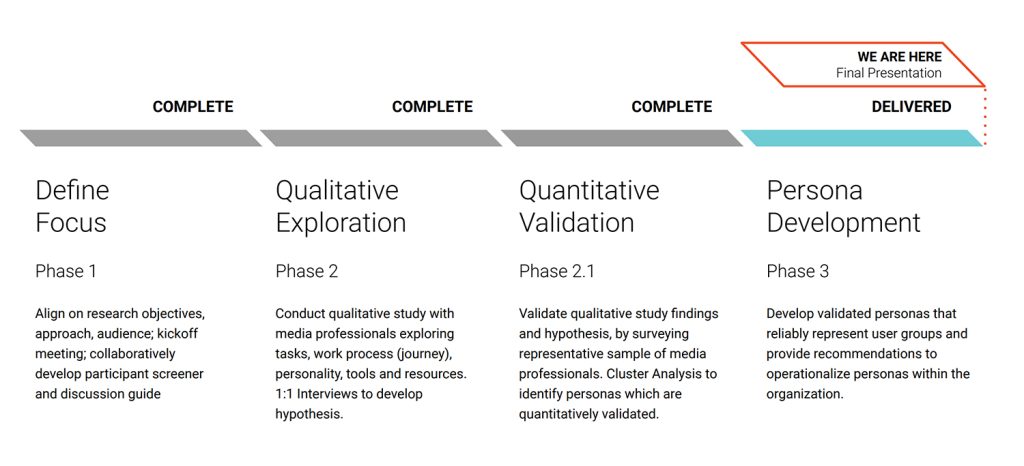
2- Research Approach
Qualitative Exploration
Sample Definition
40 media professionals, by industry:
Advertisers: 8
Agencies: 8
Digital Publishers: 5
Content Owners: 6
TV Network/Stations: 4
Radio Network/Stations/Podcasters: 5
Digital Ad Platform: 1
MVPD: 3
Method Used
- 60-minute, 1:1 interviews by video call
- Single participant
- Interviews were transcribed and responses were analyzed using the Constant Comparative method
- Overarching themes identified
- Qualitative results translated for quantitative testing
Key Questions Asked During Interview
- Organizational role and priorities
- Key tasks performed and task cadence (daily, weekly, monthly, quarterly, annually)
- Information used to make decisions
- Software and technology used to successfully complete work
- Skills needed to be successful in the role
- Internal teams that partner with the participant/participant’s department or division to complete work
Quantitative Validation
Sample Definition
40 media professionals, by industry:
900 media professionals, by industry:
● Advertisers: 123
● Agencies: 125
● Digital Publishers: 128
● Content Owners: 124
● TV Network/Stations: 100
● Radio Network/Stations/Podcasters: 100
● Digital Ad Platform: 100
● MVPD: 100
Quotas by Organizational Dept/Division
● Marketing Communications
● Analytics & Research
● Sales
● Engineering
● Creative/Content Development
Quotas by Organization Level
● Entry level
● Intermediate / Experienced
● Senior
● Manager
● Director
● Executive/C-level
Method Used
Online Survey: 39-question survey
- Single response, multiple response, matrix,
- Likert and (2) open-end questions
Persona sample size following clustering:
● Persona 1 (Alex) sample: 621
● Persona 2 (Parker) sample: 279
Key Questions Asked During Interview
- Organizational role and priorities
- Key tasks performed, task cadence (daily, weekly, monthly, quarterly, annually) and priority
- Kinds of decisions typically made
- Information used to make decisions
- Problems with information used to make decisions
- Types of technology tools used in work, cadence of use (daily, weekly, monthly, quarterly, annually), importance, satisfaction
- Changes to improve technology tools used
- Metrics used to make decisions
- Department / division responsible for ME data tools purchase
- Departments / divisions use ME data most often
- Characteristics important to being successful at work
- Skills needed to be successful
- Internal teams worked with to complete work and the importance to work
3- From Research Data to Personas
Analysis Process
- Synthesized key insights from 40 qualitative interviews and incorporated them into the quantitative survey for 900 respondents
- Processed descriptives and frequencies of all variables (questions from the survey)
- Created aggregate and categorical variables to define the potential differentiating variables
- Conducted Principal Component Analysis to determine significantly differentiating variables
- Processed the Principal Component Analysis on identified differentiating variables, and developed the first cluster per Ward’s Test
- Defined the clusters using K-Means across media industries, organizational level, and division/department
- Examined cluster centroids and standard deviation for significant separation
- Ran frequencies and correlations by Persona to define Persona characteristics and the decision framework
What We Learned
- The type of media industry was not found to differentiate. There were no unique Persona/segments by industry
- Unique personas/segments emerged across industries. Implying that across the 8 media industries surveyed, there are common characteristics that define a Persona
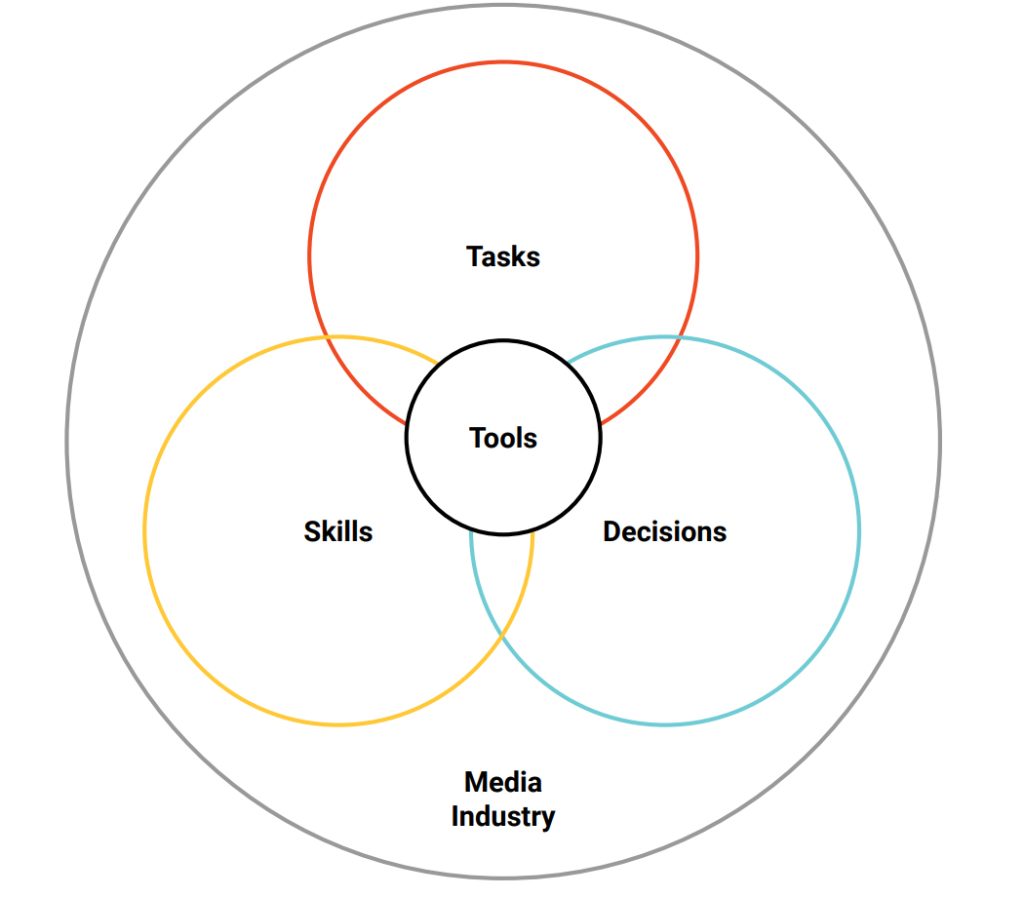
- Significant variables or unique characteristics across Personas were decisions, skills, and tasks, which formed the primary differentiating attributes to define the Personas or segments
- Purchase authority also helped in differentiating between Personas
- These Personas are quantitatively derived and can form the basis for characterizing specific user stories or scenarios specific to job type or function
4- Key Behavioral Insight
Defining Characteristics for Personas
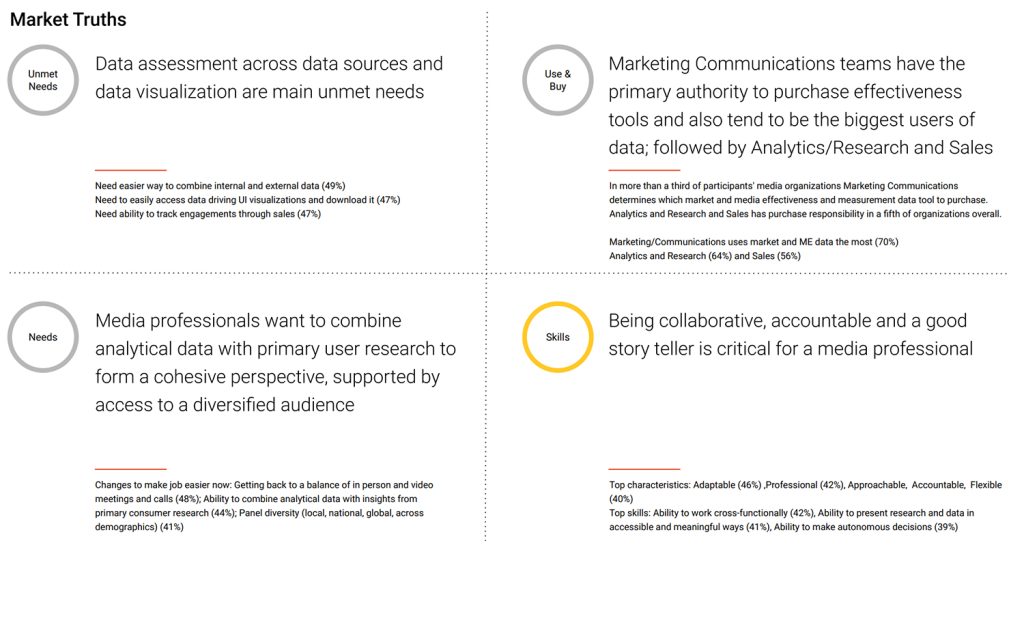
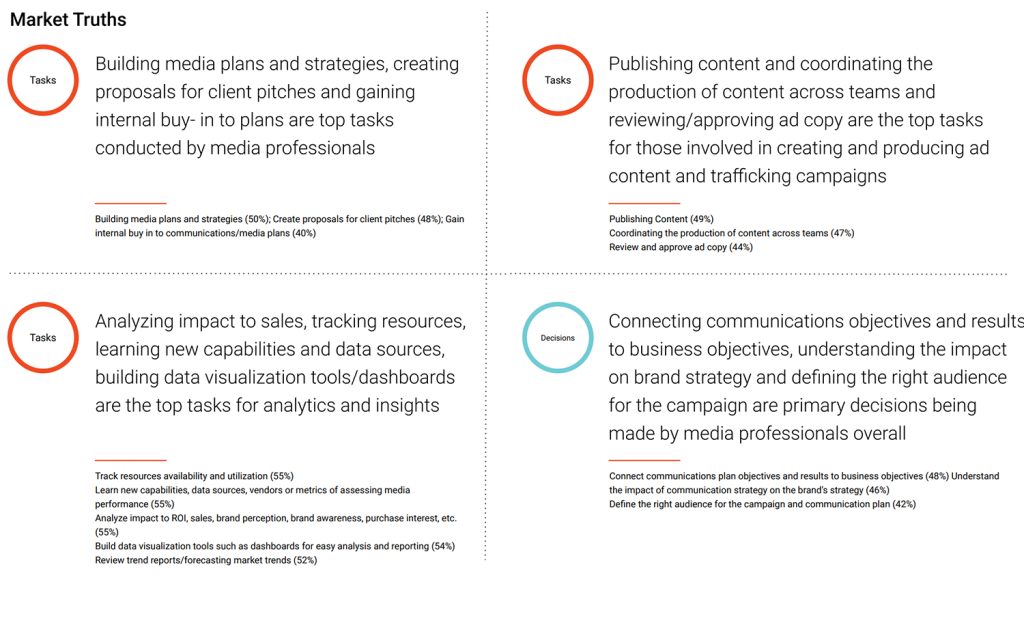
These behavioral attributes became the foundation for defining personas and building job-specific user scenarios.
These attributes have a direct impact on the tools they use.
These defining personality
Attributes form the genesis for further definition through user scenarios that are specific to a job type or function.
5- Persona Segments
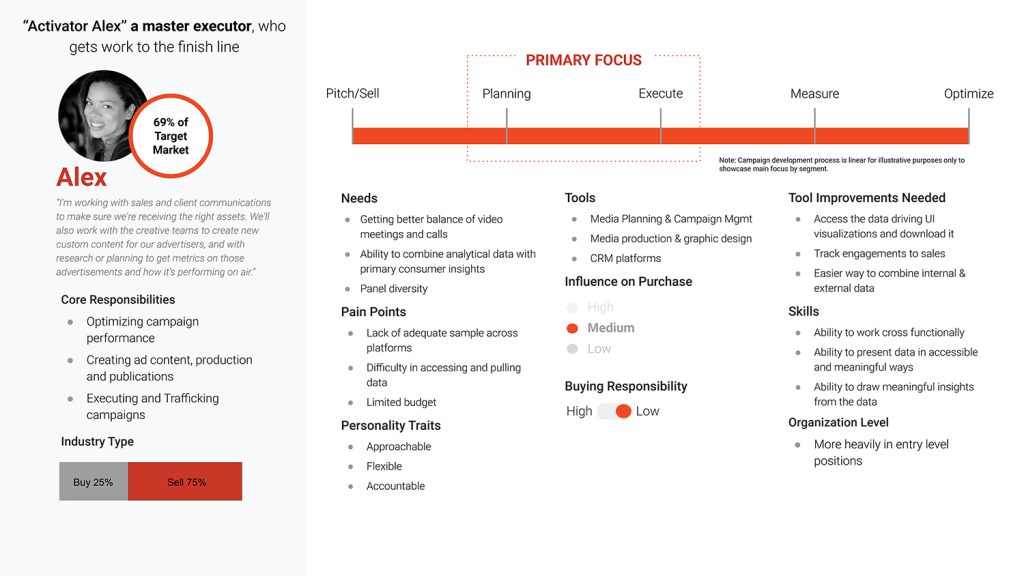
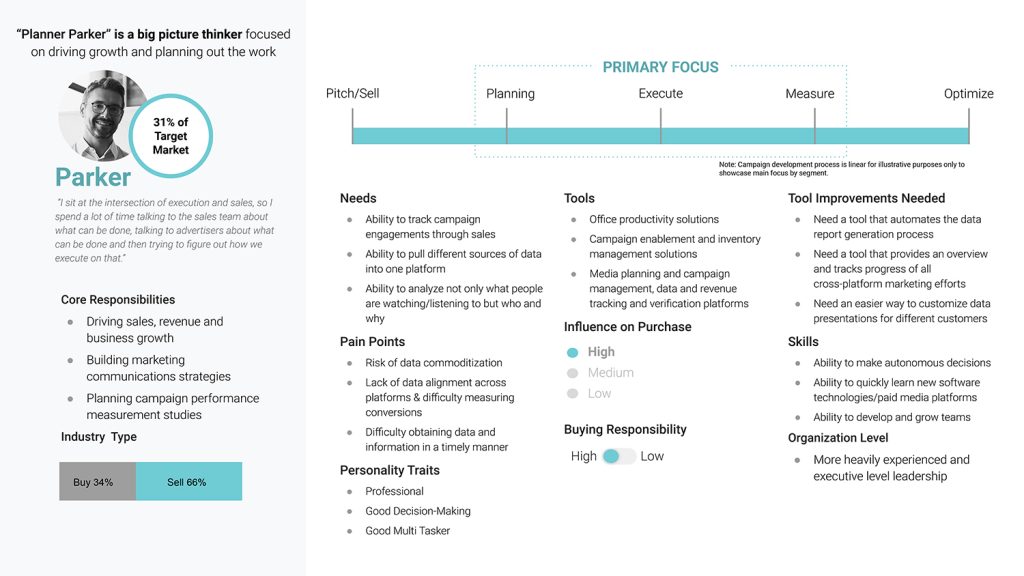
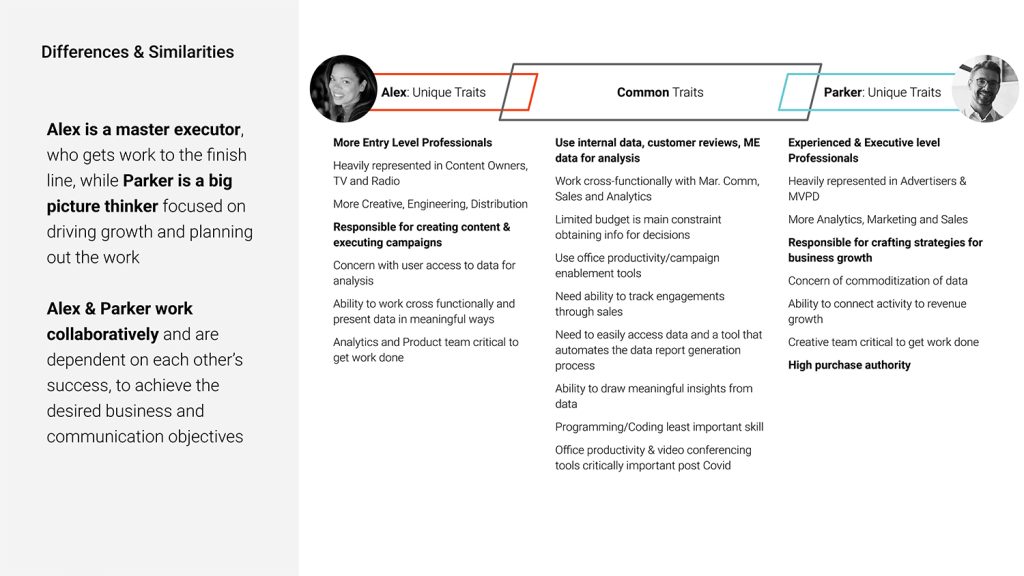
6- Decision-Making Framework
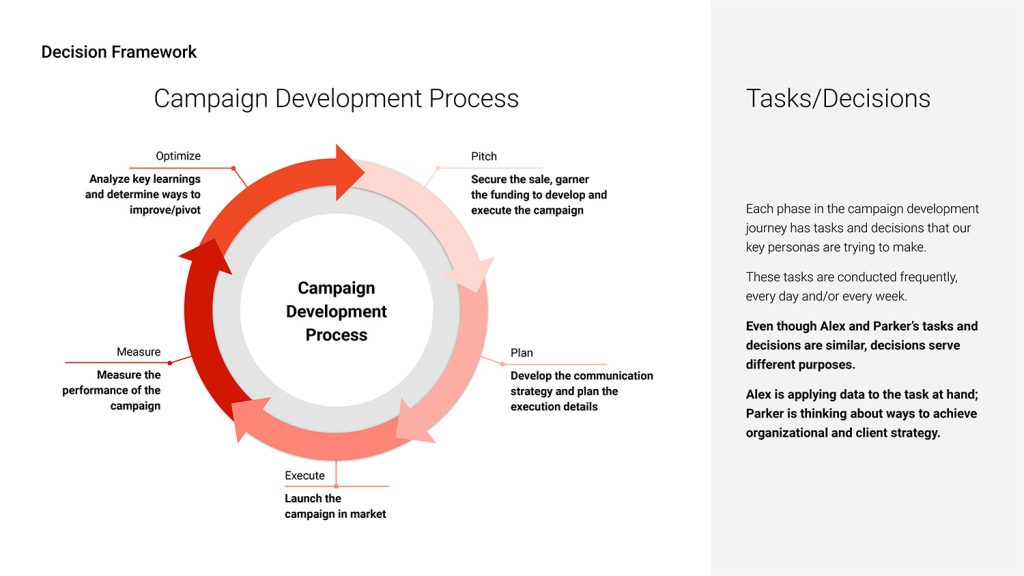
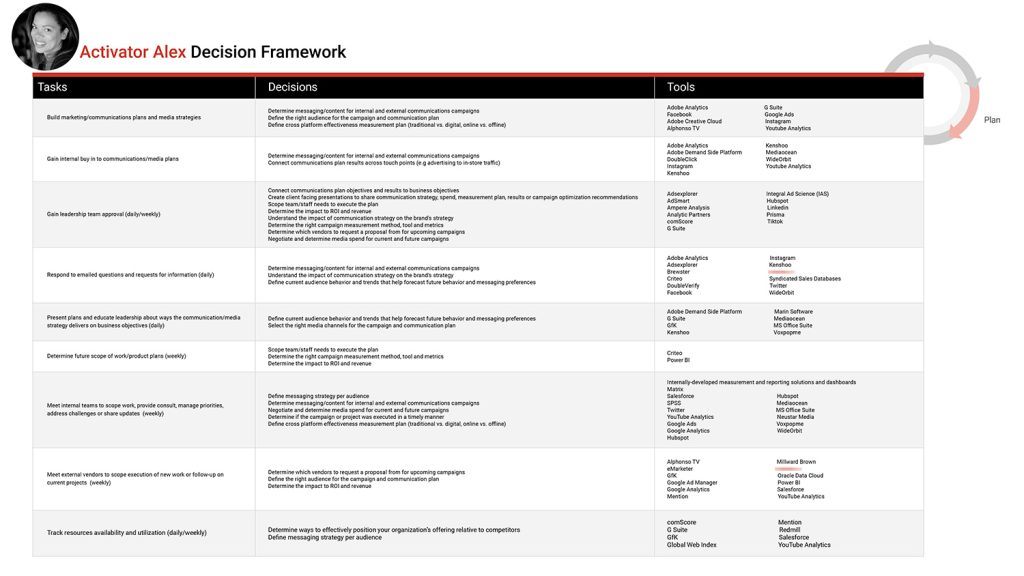
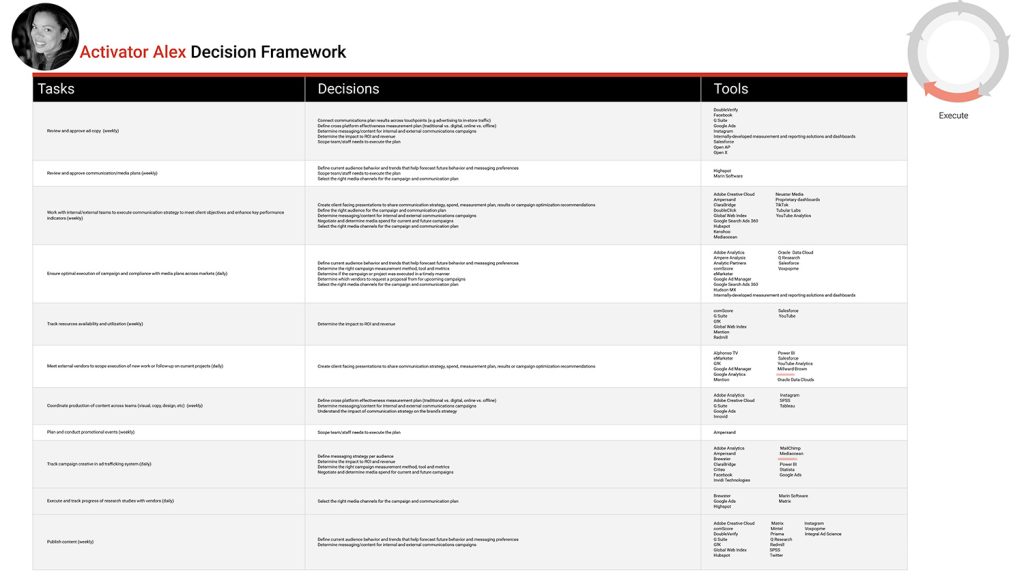
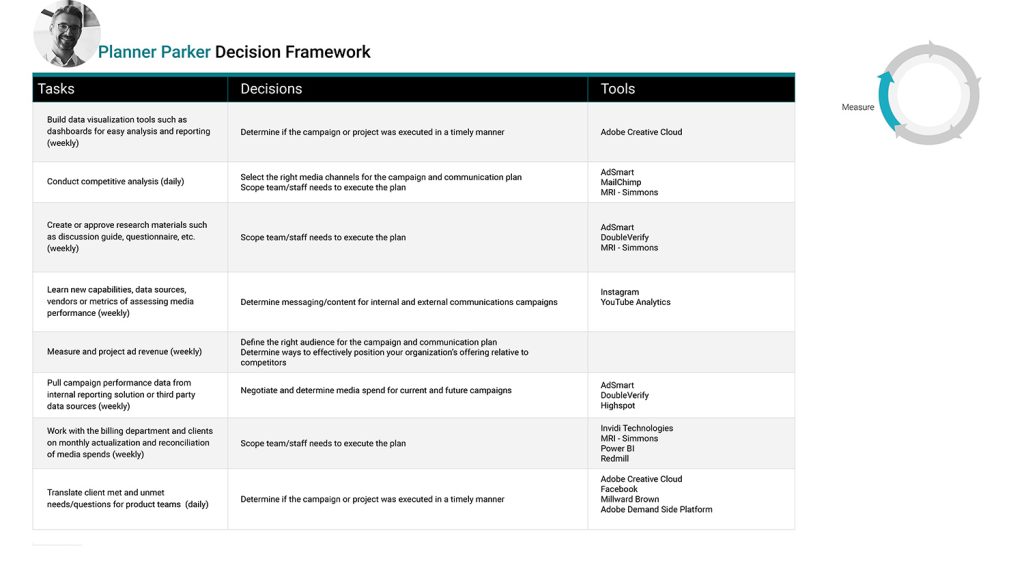
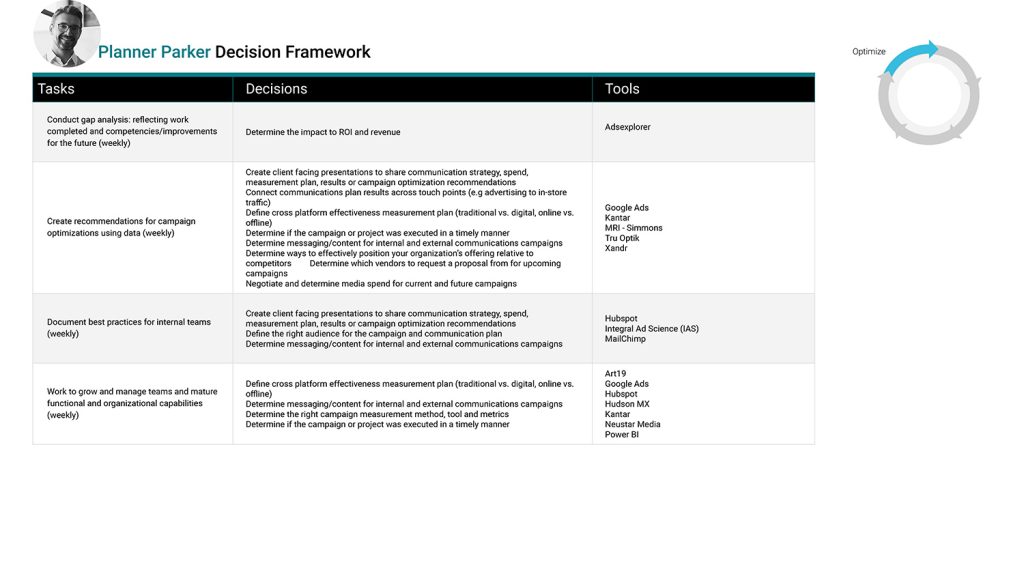
7- How Personas Were Applied
Connecting Personas to Product Strategy
Personas enable alignment to user needs and collaboration across strategy, analytics, UX, and product development efforts.
01. Portfolio Alignment & Rationalization
Enables aligning the products to user needs and reducing duplicative, redundancies across industry verticals.
02. Product Positioning & Communications
Aligning each product uniquely to the value they bring to the portfolio and determining how best to communicate its value to the ‘personas’.
This leads to designing optimized marketing communication strategies that address user needs and roles in the organization.
03. New Product Development
Aligning products to user needs defines ways to enhance the current product portfolio and design new products to solve unmet needs.
Post User Persona Development
- Develop a persona typing tool to align with actual user behavior for recruiting and client profiling
- Bring personas to life through contextual inquiry to help develop empathy and break down individual processes for completing work at a tool level
- Define the current product portfolio roadmap aligned with user personas
- Identify opportunities for new product/tool development
- Define a roadmap to expand user personas in international markets
Outcome
The personas were not treated as static profiles, but as a shared decision-making tool across teams.
They helped align product strategy, portfolio planning, and marketing direction around real user behavior, enabling faster and more confident decision-making.