
Integrating UX into the Agile Workflow at Nielsen Netherlands
Project for: Nielsen Media Research NL
Project time: 3 Months
My Role: UX Process Owner, UX Researcher, Workflow Designer

When I joined Nielsen Netherlands, I was the first full-time UX designer working directly with the Dutch department.
While Nielsen had UX teams in other countries, the Netherlands team did not yet have a local UX process integrated into its agile workflow.
I noticed this gap early and took ownership of defining how UX, research, product, development, and QA could work together inside the existing agile system. I was responsible for stakeholder interviews, workshop organization, feedback collection, workflow design, Jira structure updates, documentation, reporting, and testing the new process with the team.
This project focused on bringing UX into the agile working process of Nielsen Netherlands. The goal was not to create a heavy process or add more meetings. The goal was to make the existing workflow clearer, reduce unnecessary discussions, and help teams spend more time on focused product work.
I first created and tested a lightweight version of the workflow. After that, I developed a more complete version that included UX research, user validation, usability testing, and post-release feedback loops.
Understanding the Existing Workflow
I started by speaking with people from every department involved in the product development cycle. I met with product managers, developers, QA, customer-facing teams, and the core UX team in the US to understand how the current process worked in practice.
During these conversations, I focused on their pain points, expectations, frustrations, and the parts of the process that slowed them down. I then documented the findings and discussed the outcomes with my managers and product managers before moving into workflow design.
Main Problems I Identified
One of the clearest problems was the number and length of meetings. Developers were often included in discussions that lasted longer than necessary. After the first part of these meetings, people often lost focus and stayed only physically present.
This meant that valuable development time was being taken away from actual work. The process needed to be lighter, more structured, and easier to follow. Teams needed fewer repetitive meetings, clearer responsibilities, and better refinement sessions where important details could be discussed at the right time.
Designing the First Lightweight Agile UX Workflow
Based on the findings, I created the first lightweight version of the agile UX workflow. This version focused on improving collaboration without adding more process complexity.
I mapped the key steps from feature request to refinement, design, development, QA, and release. I also reviewed the workflow with managers, product managers, developers, QA, and other stakeholders to make sure it worked for the team in practice.
After collecting feedback, I refined the workflow, updated the Jira board structure, and adjusted the ticket structure so each team could follow the work more clearly. This first version was tested across two sprints and improved based on team feedback.

Please click the image to see the detailed flow
The first version focused on reducing unnecessary meetings, clarifying responsibilities, improving Jira visibility, and making the product development process easier to follow.
Adding UX Research to the Agile Workflow
After the lightweight workflow was tested, I created a more complete version that included UX research activities. The goal was to make research part of the product cycle instead of treating it as a separate activity outside the agile process.
This version defined when research should happen, how research needs should be discussed with product managers, how customer-facing teams could support participant recruitment, and how findings should be translated back into product decisions.
For more complex features, UX created flowcharts to map the full experience and validate the direction with the team. When research was needed, I defined the research approach together with the product manager, organized the sessions, collected feedback, prepared the report, and shared the findings with the team.
Research Integrated Agile UX Workflow
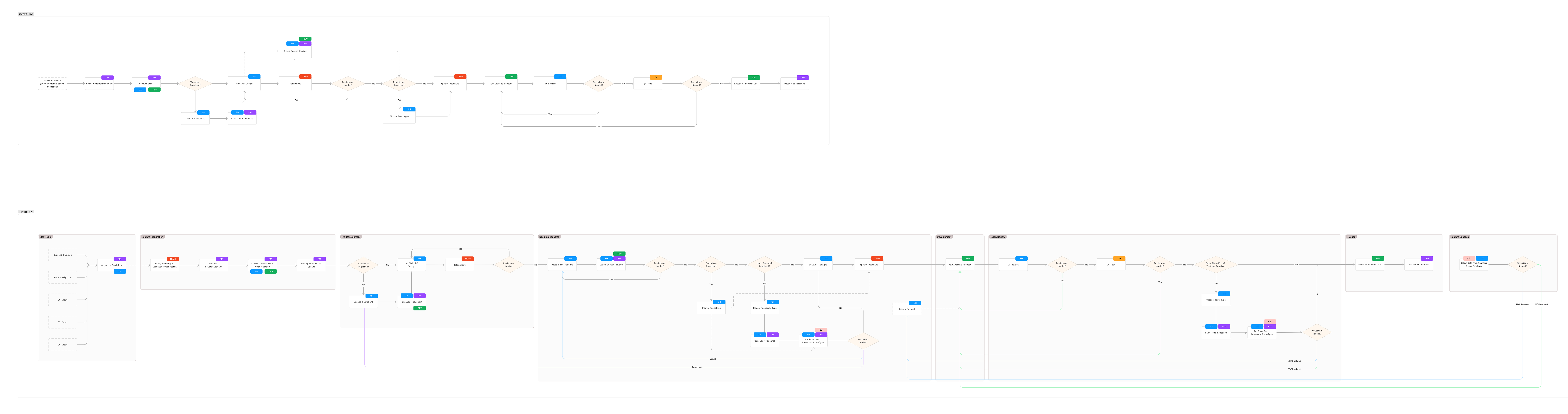
This version added research planning, user validation, usability testing, UX and QA review, and post-release feedback loops into the agile product development process.
The workflow covered the full path from feature request to release. It started with request intake, team discussion, story mapping, MVP definition, user story creation, and sprint planning. After that, UX validated the flow, reviewed the design direction with product managers, developers, and QA, and prepared prototypes when needed.
After development, UX and QA reviewed the feature together. If usability testing was needed, I planned the test, collected feedback, prepared the report, and translated the findings into product improvements. After release, the team could continue learning through analytics and feedback from customer-facing teams.
Please click the image to see the detailed flow
Outcome
This version added research planning, user validation, usability testing, UX and QA review, and post-release feedback loops into the agile product development process.
The workflow covered the full path from feature request to release. It started with request intake, team discussion, story mapping, MVP definition, user story creation, and sprint planning. After that, UX validated the flow, reviewed the design direction with product managers, developers, and QA, and prepared prototypes when needed.
After development, UX and QA reviewed the feature together. If usability testing was needed, I planned the test, collected feedback, prepared the report, and translated the findings into product improvements. After release, the team could continue learning through analytics and feedback from customer-facing teams.
Note: Please feel free to contact me for more information and a detailed explanation of each stage.